

Shanti Project
Timeline
Aug 2023 -
Aug 2024
Role
Sole Designer
Team
1 PM
1 Designer
6 Engineers
Tech stack
React Native
Typescript
Supabase
automating services for pet owners with disabilities
Shanti Project is a pioneering nonprofit that builds human connections to reduce isolation, enhance health and well-being, and improve quality of life.
Currently they operate the Pets are Wonderful Support (PAWS) program that offers need-based resources and services to pet owners affected by disabilities. However, their services are manually handled and currently have a lengthy waitlist to join, thus poses a challenge for their reach to extend those in need.
As the lead designer on the team I worked closely with the non-profit to design from 0 to 1, a web application to automate and scale the Pet Food Bank’s distribution process and provide an inventory management system.
context
PAWS Program’s Mission:
Reduce cost and eliminating financial burden
Provide pet supplies and veterinary care services
Clients receive the support they need to care for their pets
problem
current system
Manual, non-automated system
Phone calls to place order
Data recorded on paper
Lack of traceable documentation
issues
Long waitlist for clients
Unable to scale need-based services
Hard to access customer data
Difficult to track and manage stock
problem statement
How might we ensure that Shanti Project clients receive timely and tailored access to essential supplies and resources?
Solution
We built a web application to automate the supply distribution process and expand services across the San Francisco Bay Area.
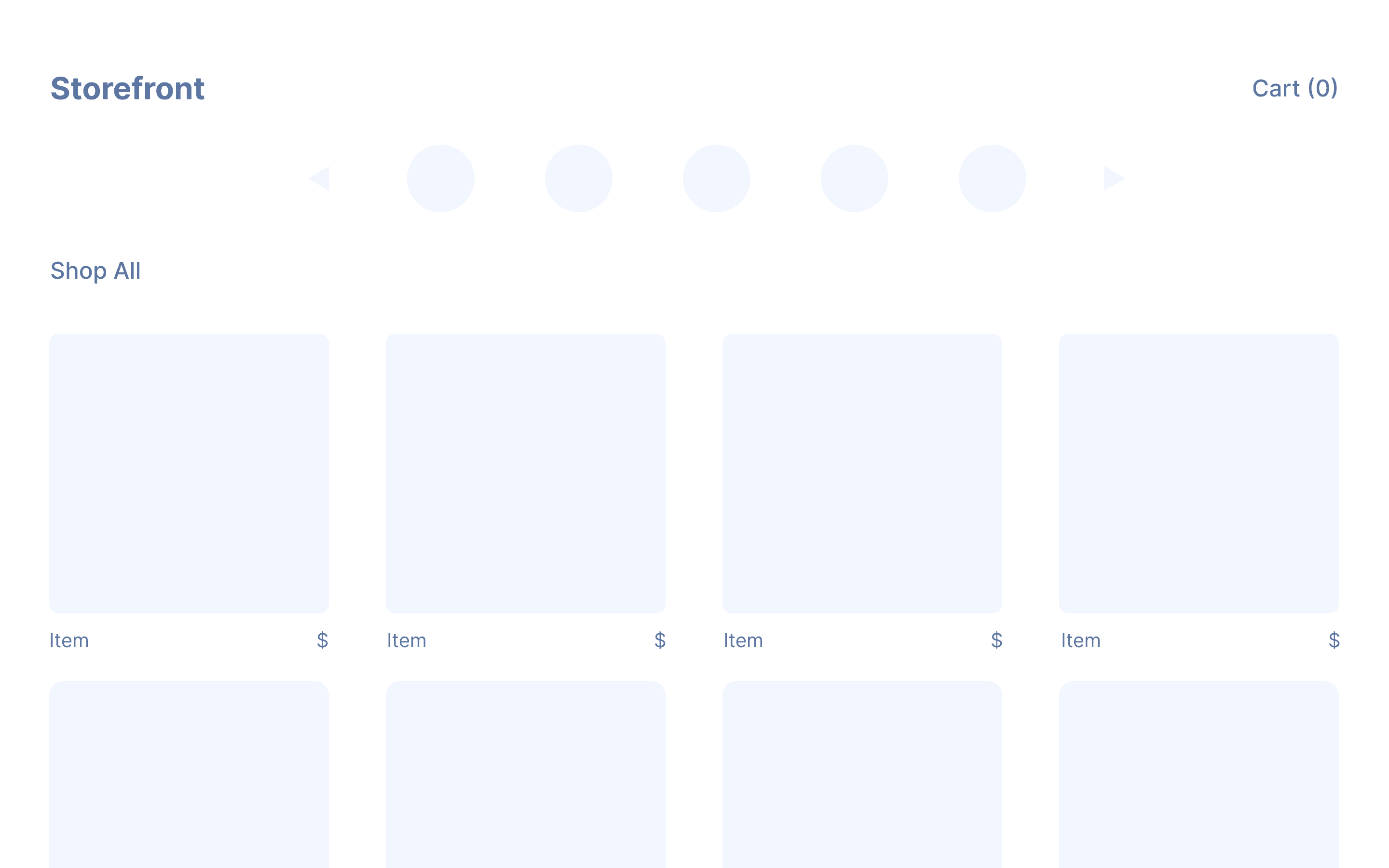
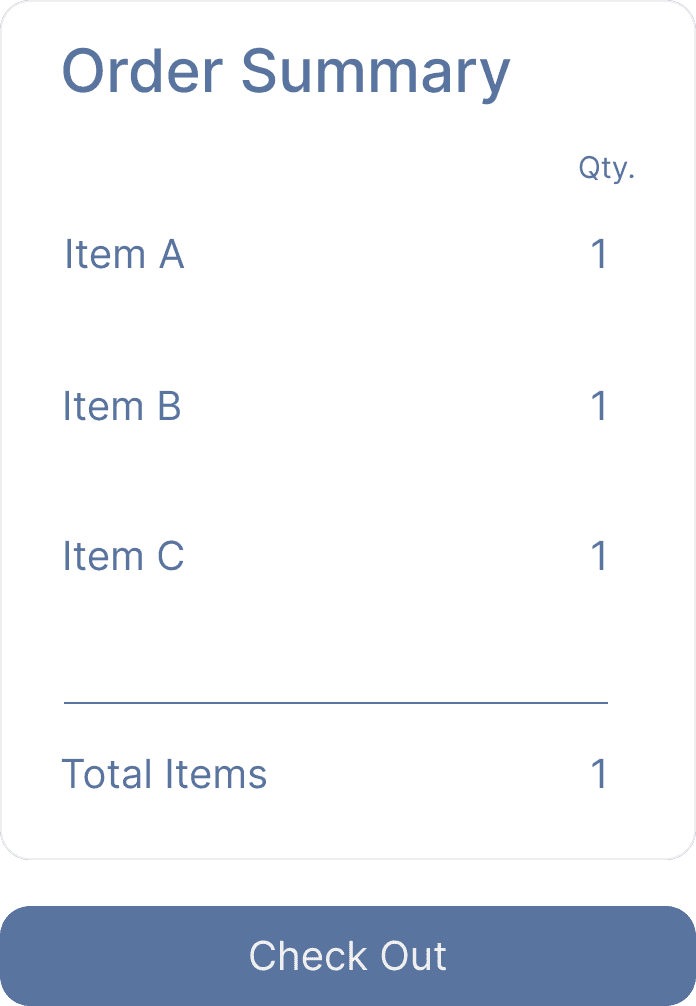
Low fidelity feature ideation
Accommodating to two pre-assigned user groups

Users who schedule from a range of available times.
Users who prefer direct delivery to their address.
Design decisions
Early iterations and testing out issues
Drafting out ideas for nav bar, that allows users to easily go through the storefront, profile, and cart.
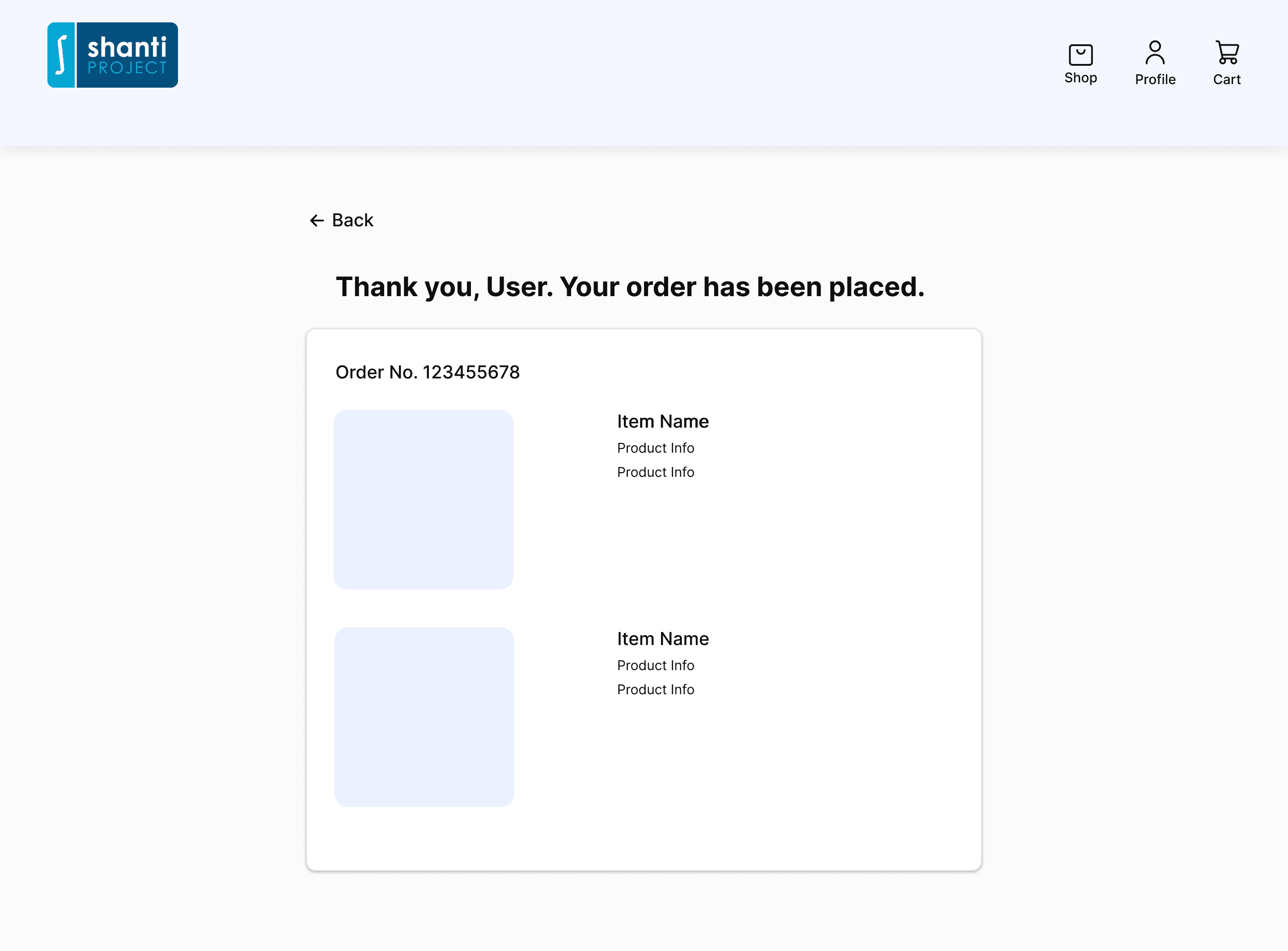
Early iteration of order confirmation.
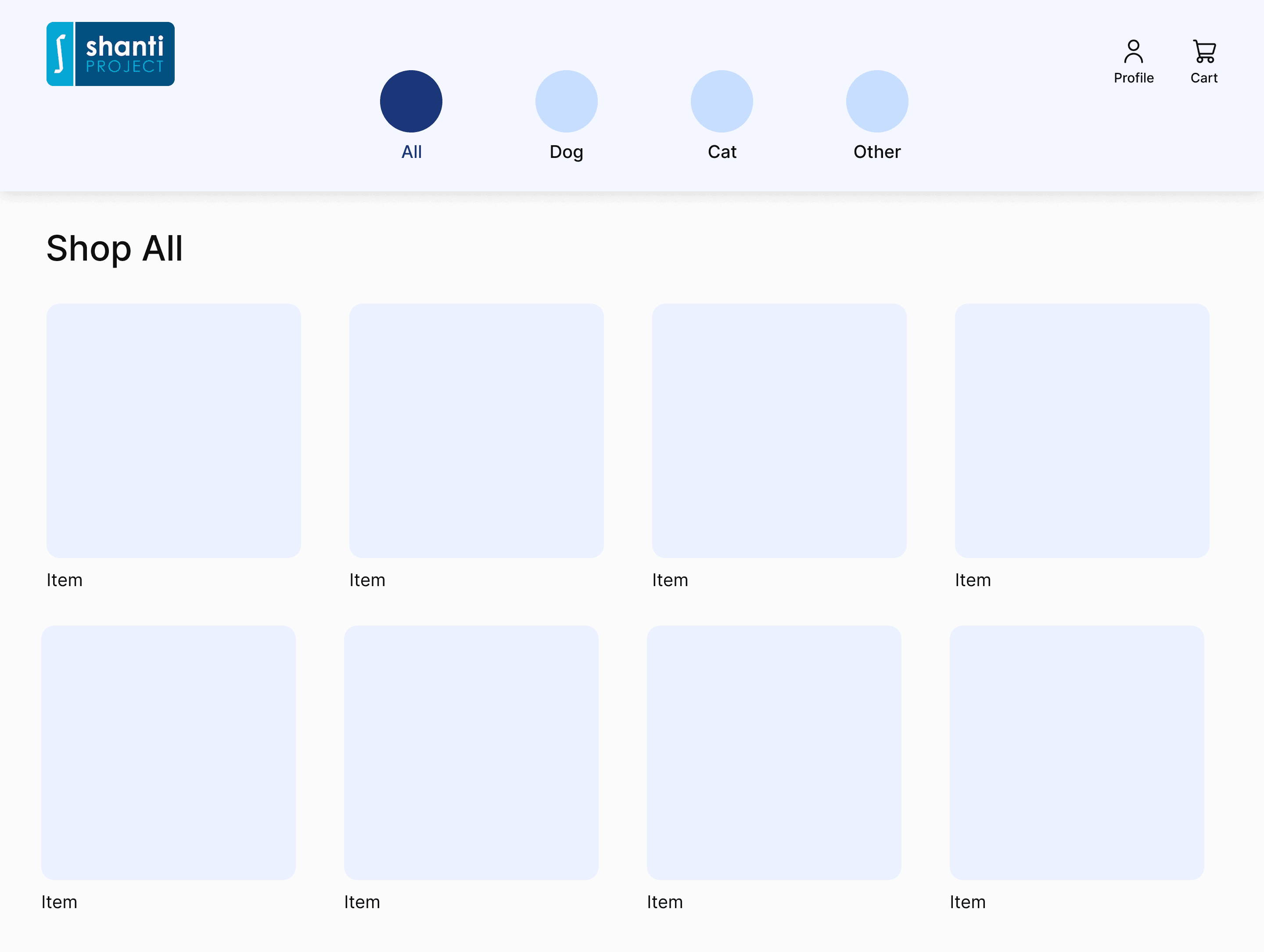
Storefront iteration with visual forward category navigation.
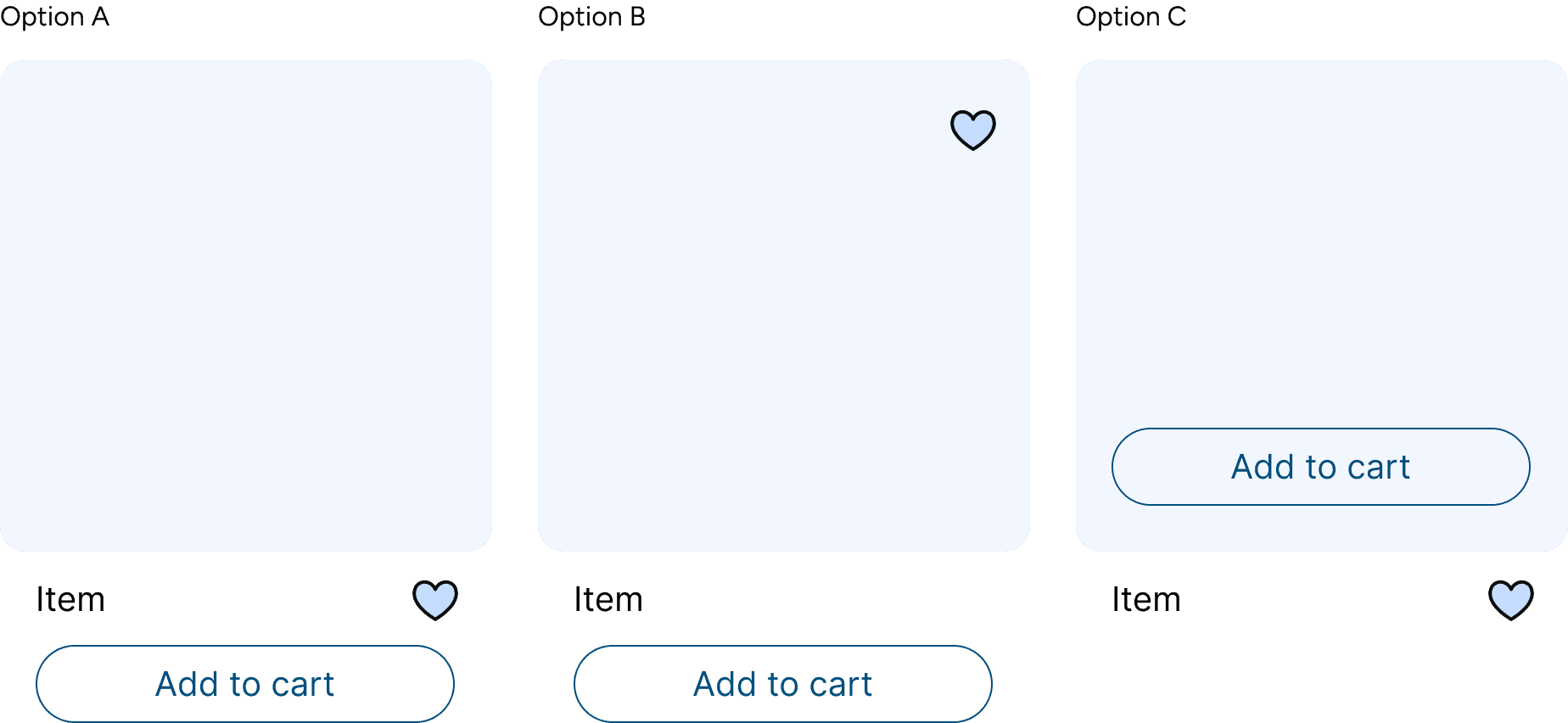
Tested iterations of add to cart action. Moved forward with Option B to increase spacing and reduce confusion between clickable action points.
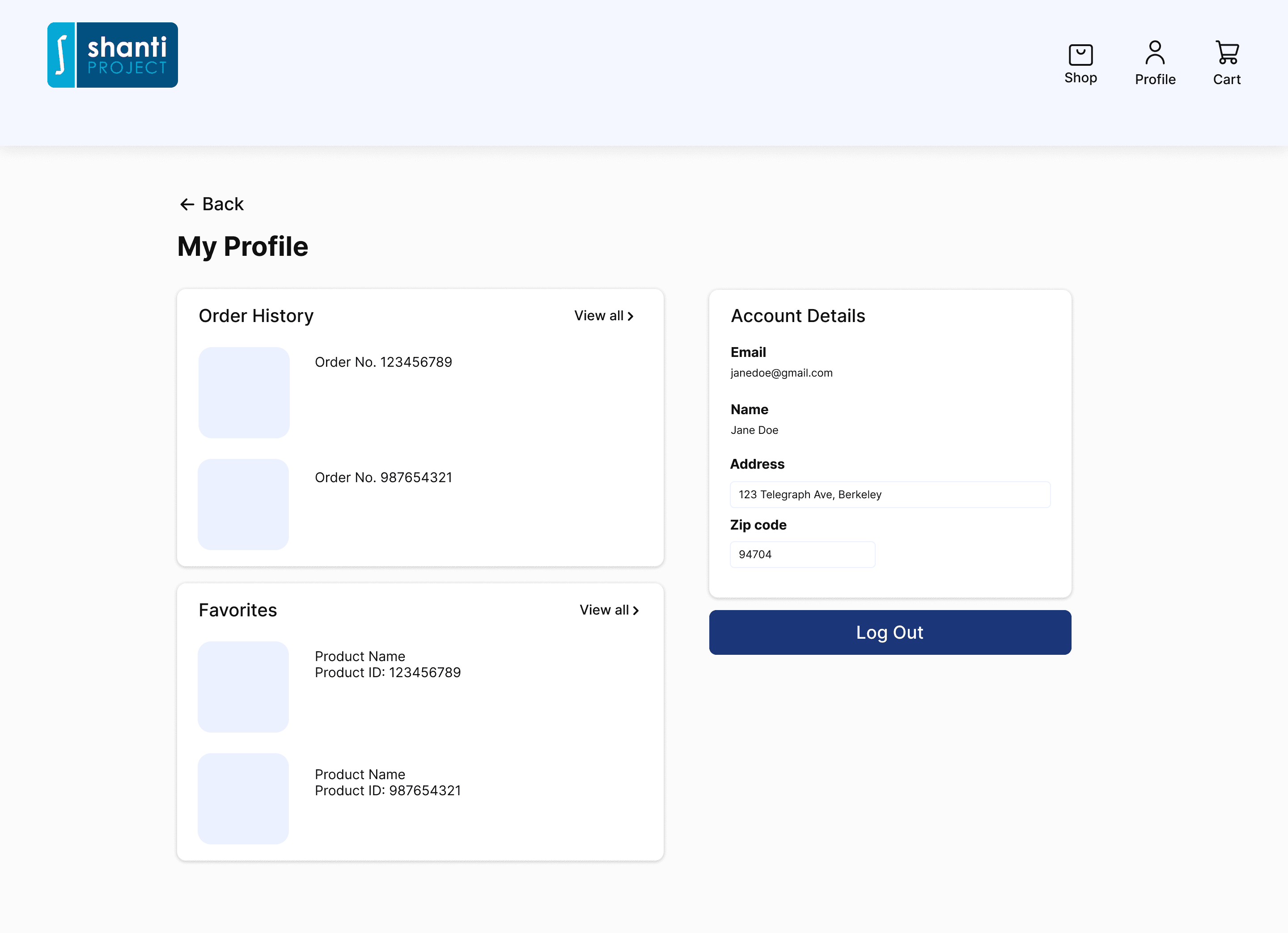
Early iteration of profile with right-aligned account details, caused visual hierarchy confusion.
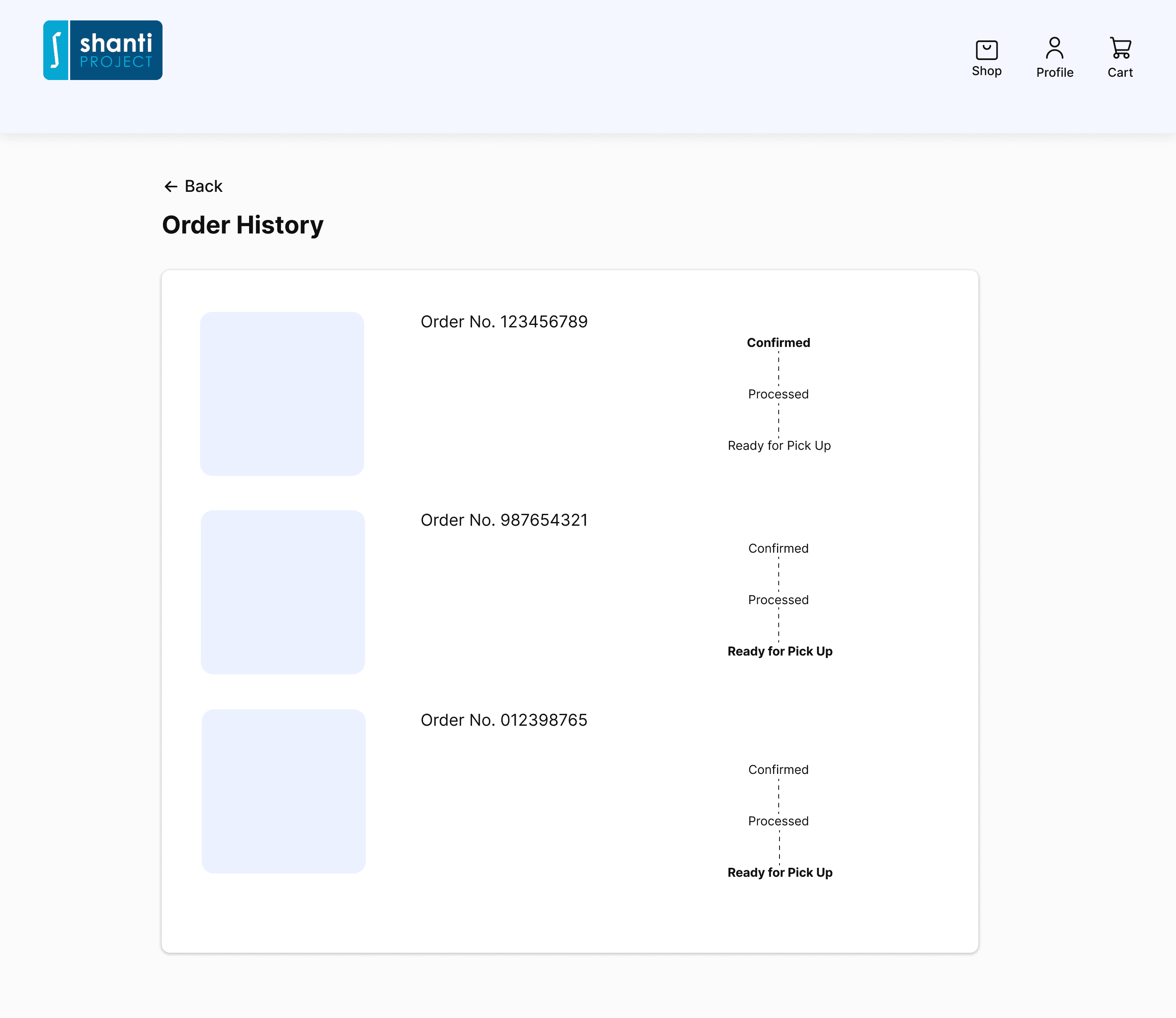
Iteration of order statuses with dense information.
alternate considerations

We considered using a Shopify integration to the backend, however that would’ve added an additional yearly cost for the non-profit. There would also be less flexibility to modify and address user concerns.
tech stack

NEXT.JS, Supabase, Vercel, Retool
Accessible and lower cost, allowing for maximum flexibility with specific accommodations for user needs.
Final designs
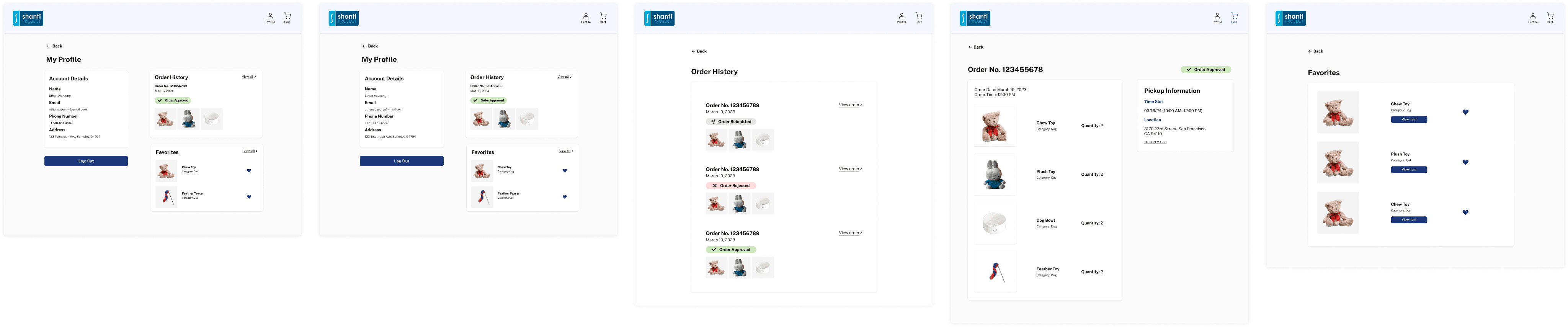
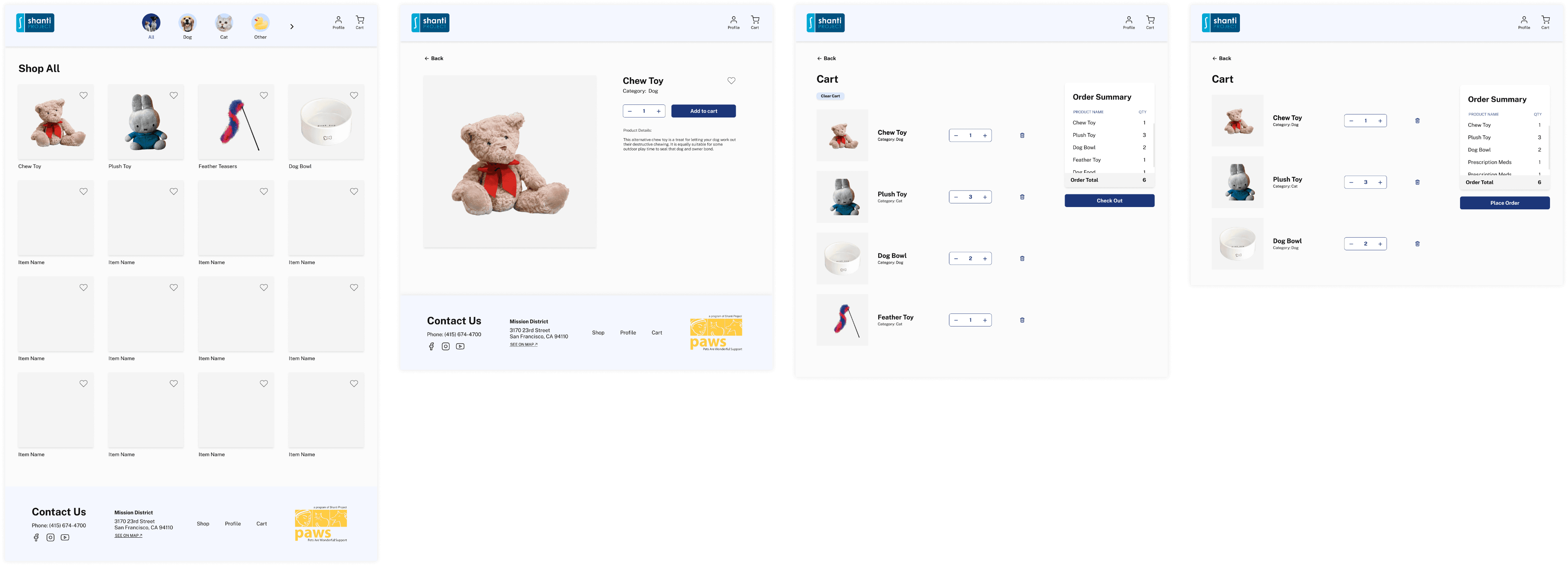
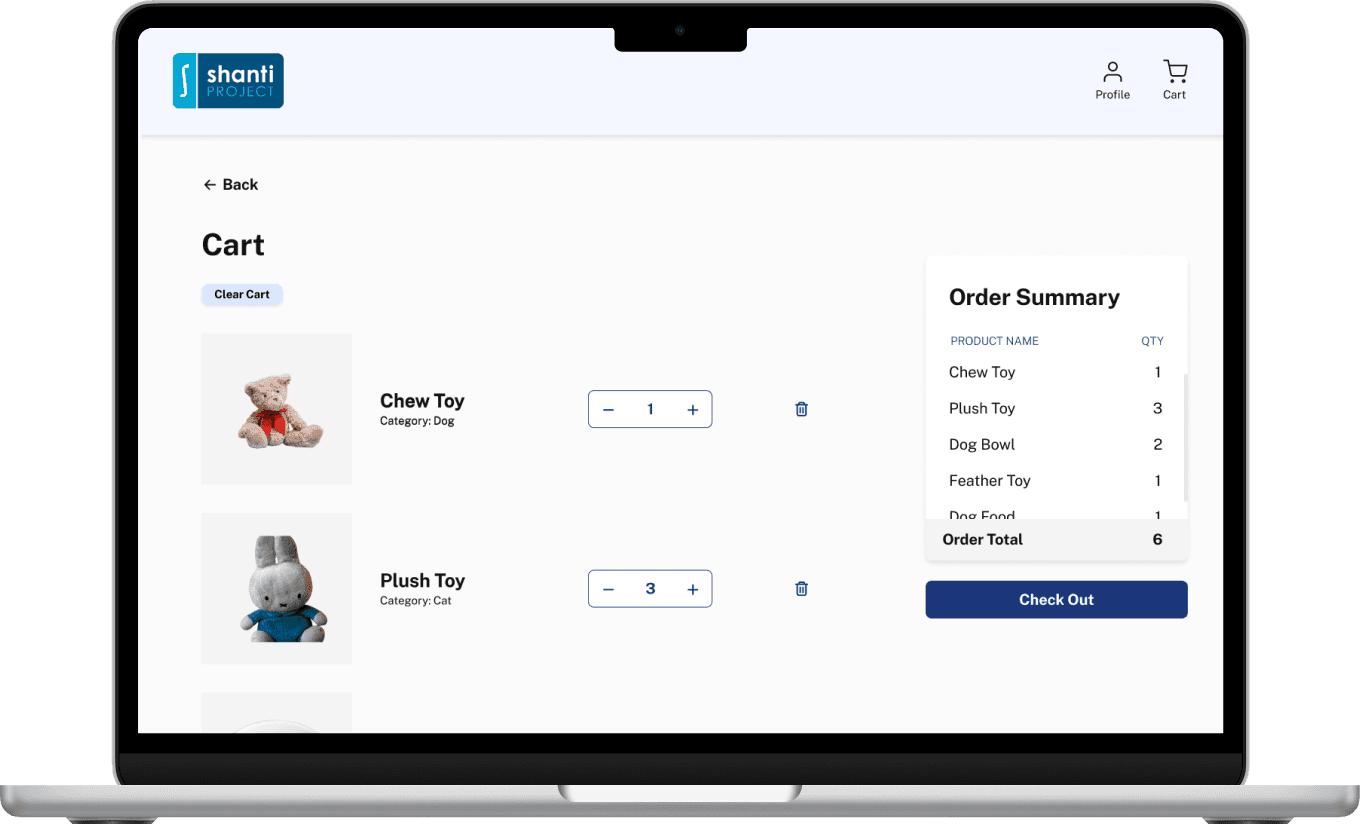
User Authentication
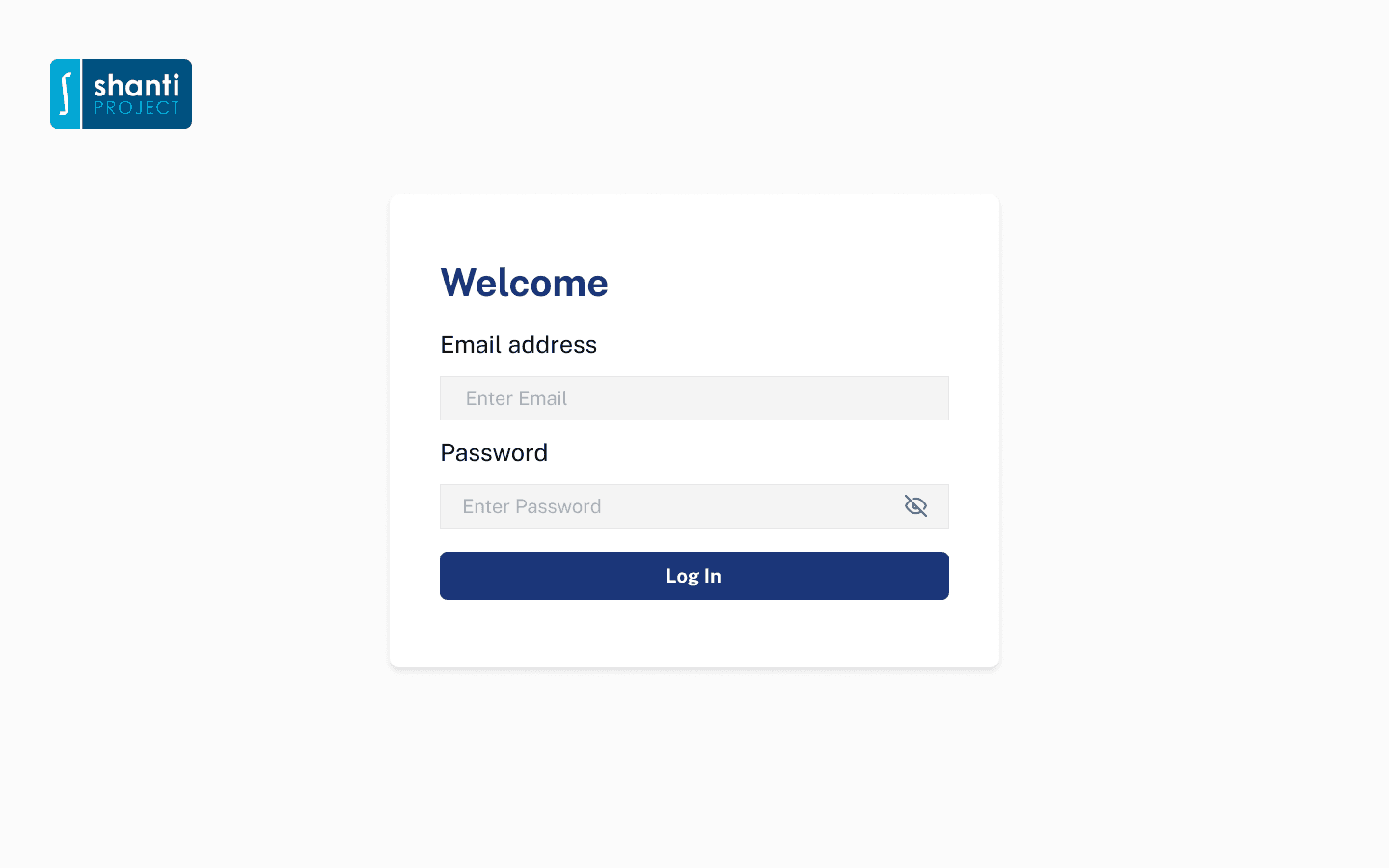
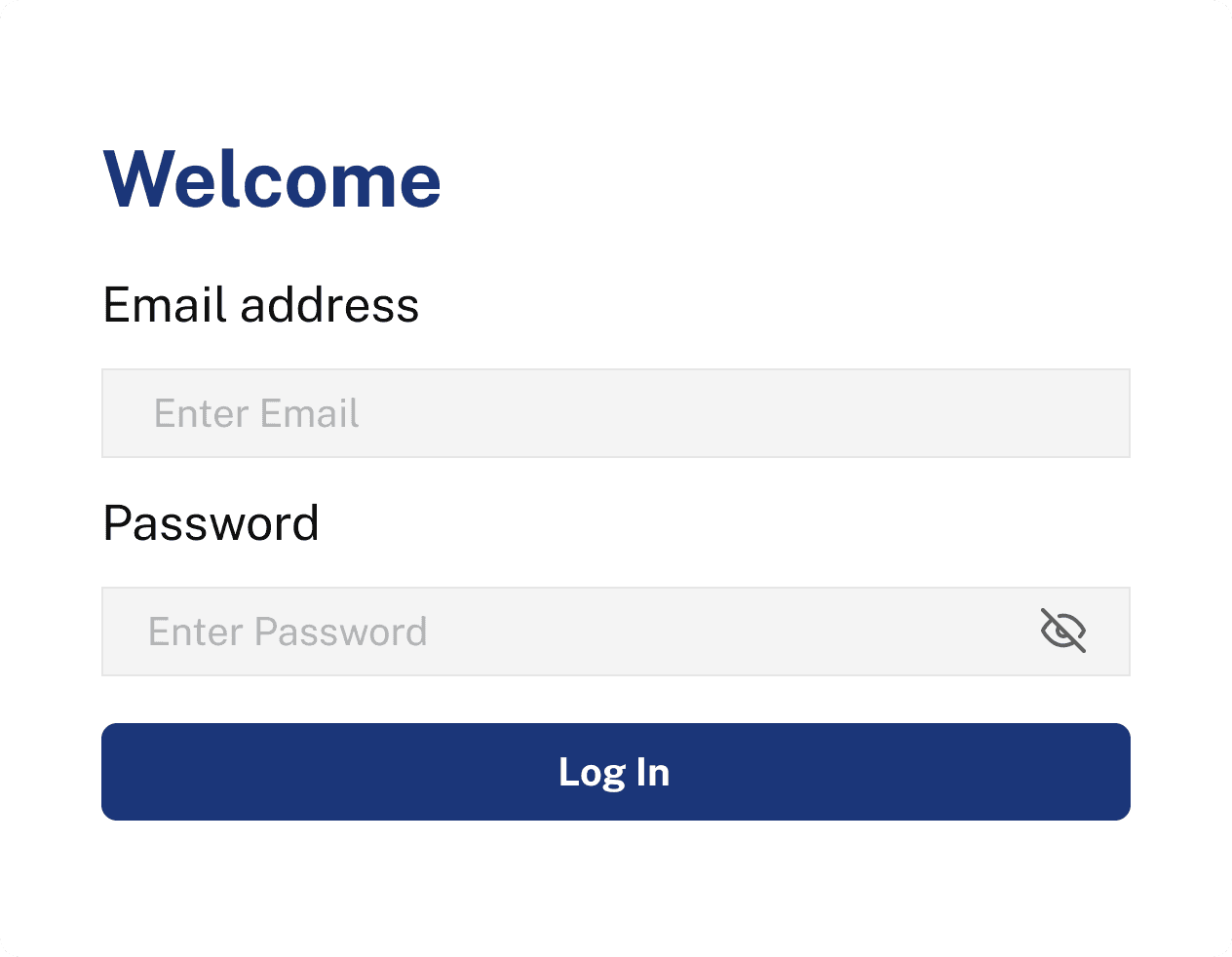
Log in access for admin approved users. Clients are required to register and have their accounts created by the admin.
Storefront
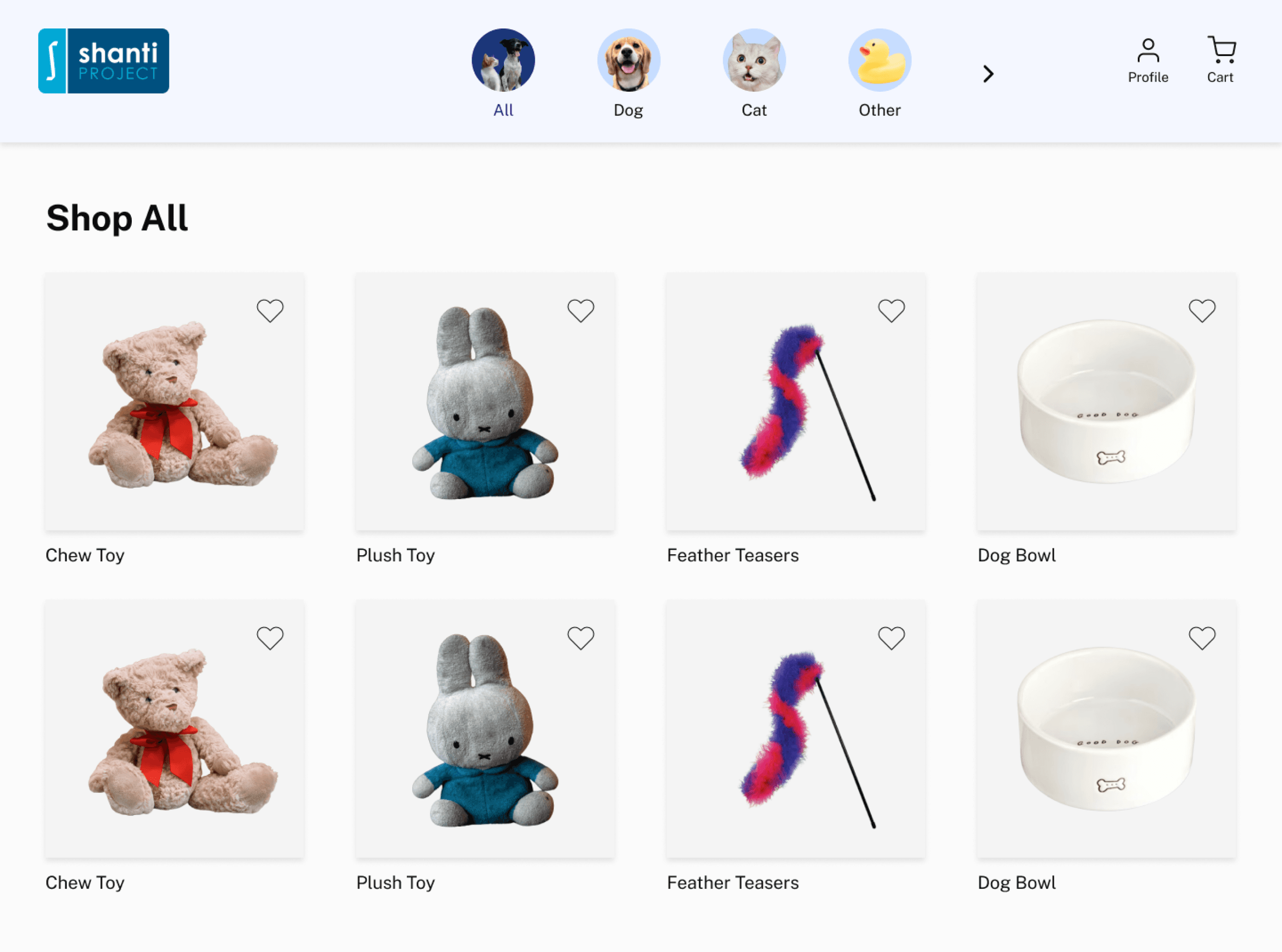
Storefront browsing features a few main pet categories that is currently offered. Admin can add more pet categories as needed.
Users navigate through the different categories, aided by the visual representation of each animal.
adding an item to cart
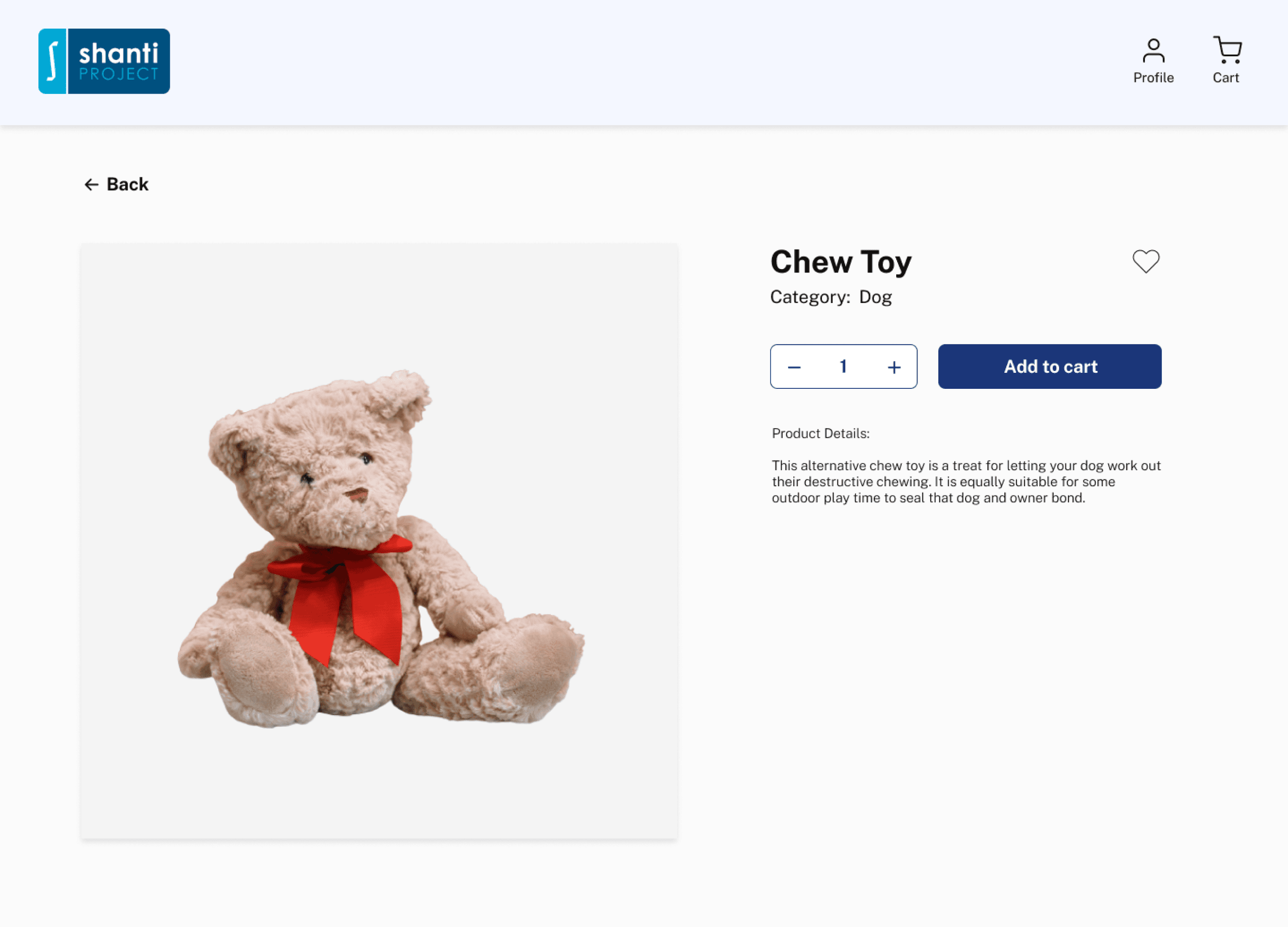
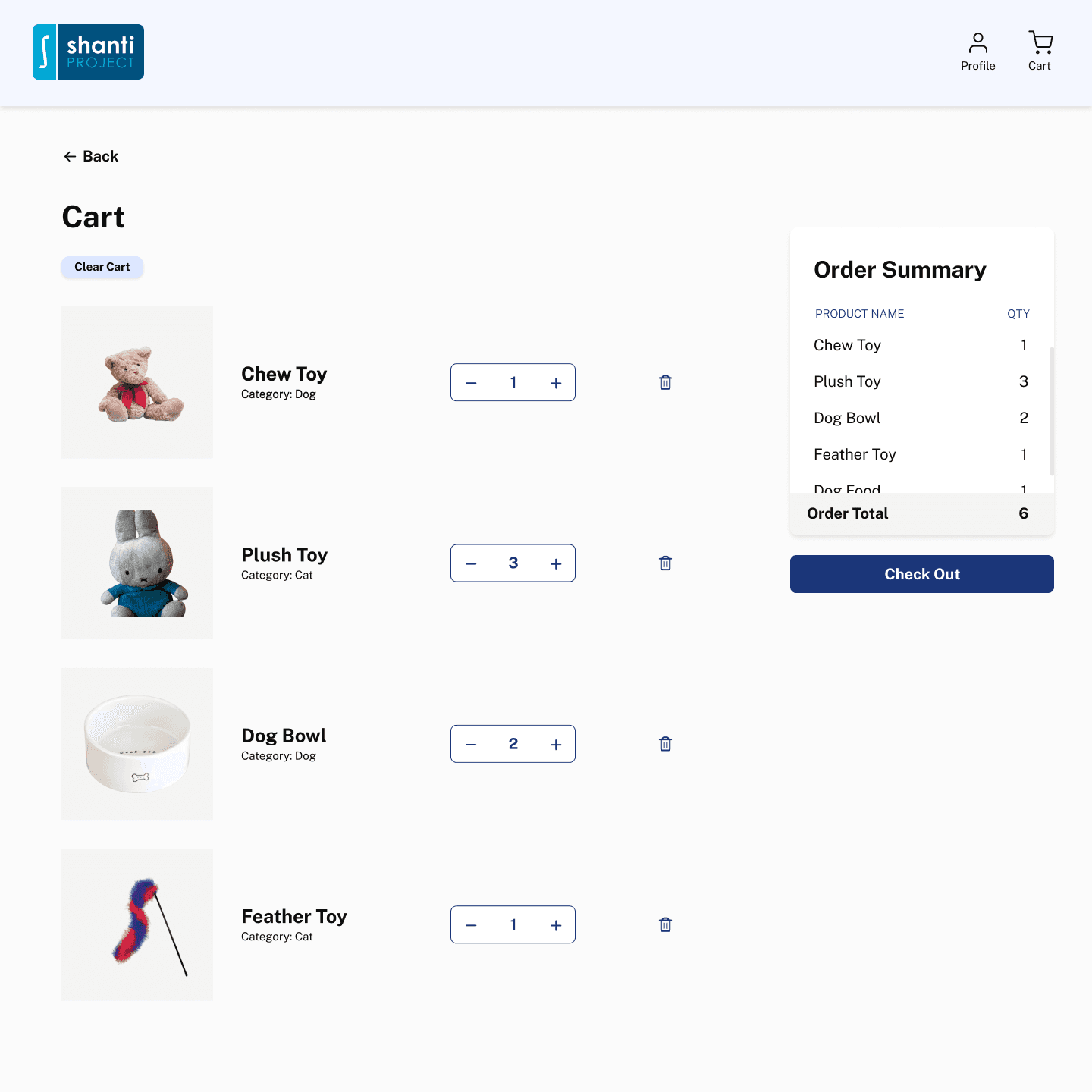
Shanti Project operates on a pro-bono model, leaving items unpriced. There are no upper limits for the quantity allowed, however admin users will approve each transaction that a user places.
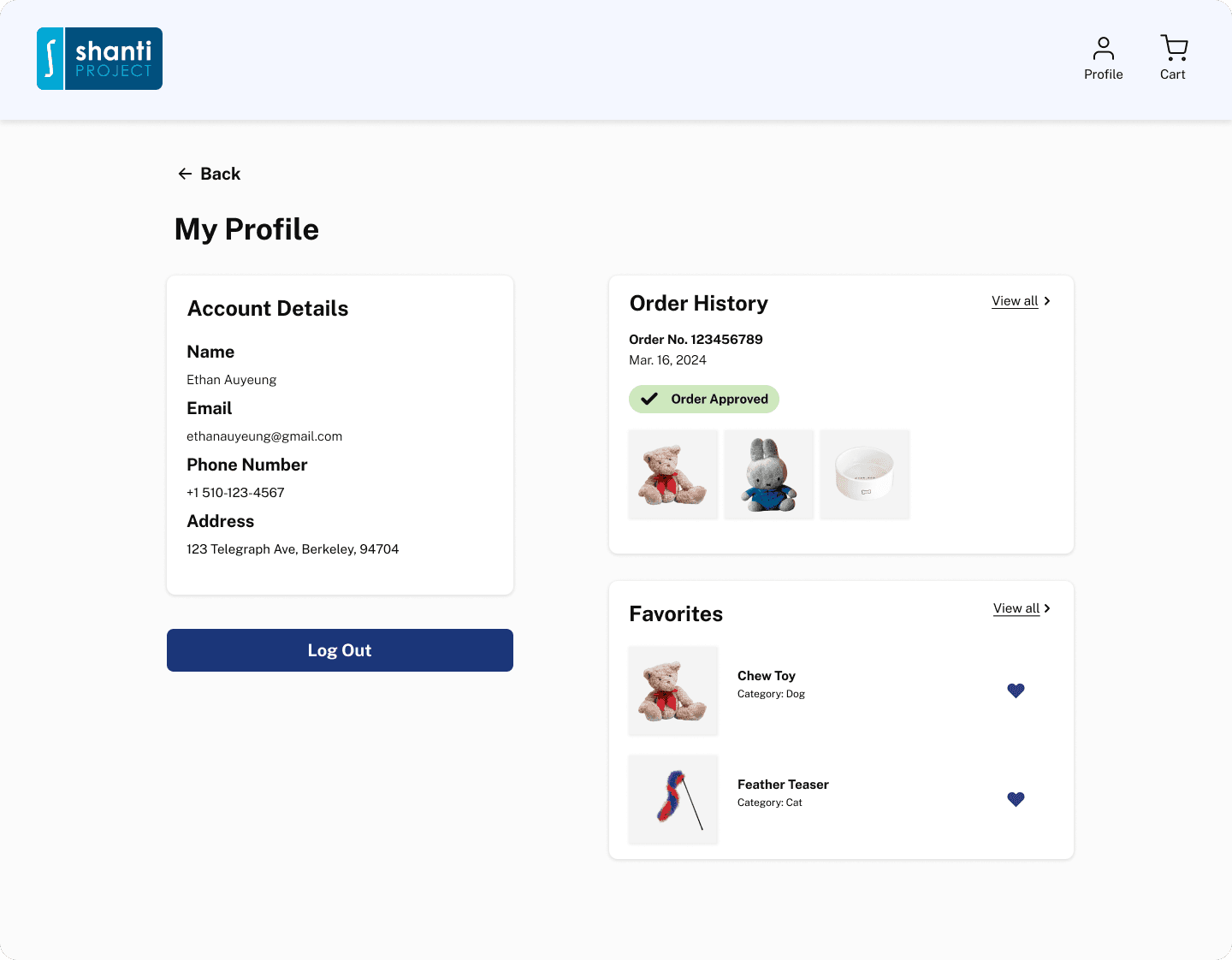
Users can add items to favorites, located under profile to easily access their frequently used items.
© KATY NGUYEN 2026 | MADE WITH MUCH PONDERING & GOOD MUSIC ♪